How Hip Hop Helped Improve Recycling in St Helens
Can Hip Hop help a town recycle more?
For us, that isn’t a theory.
We’ve already done it.
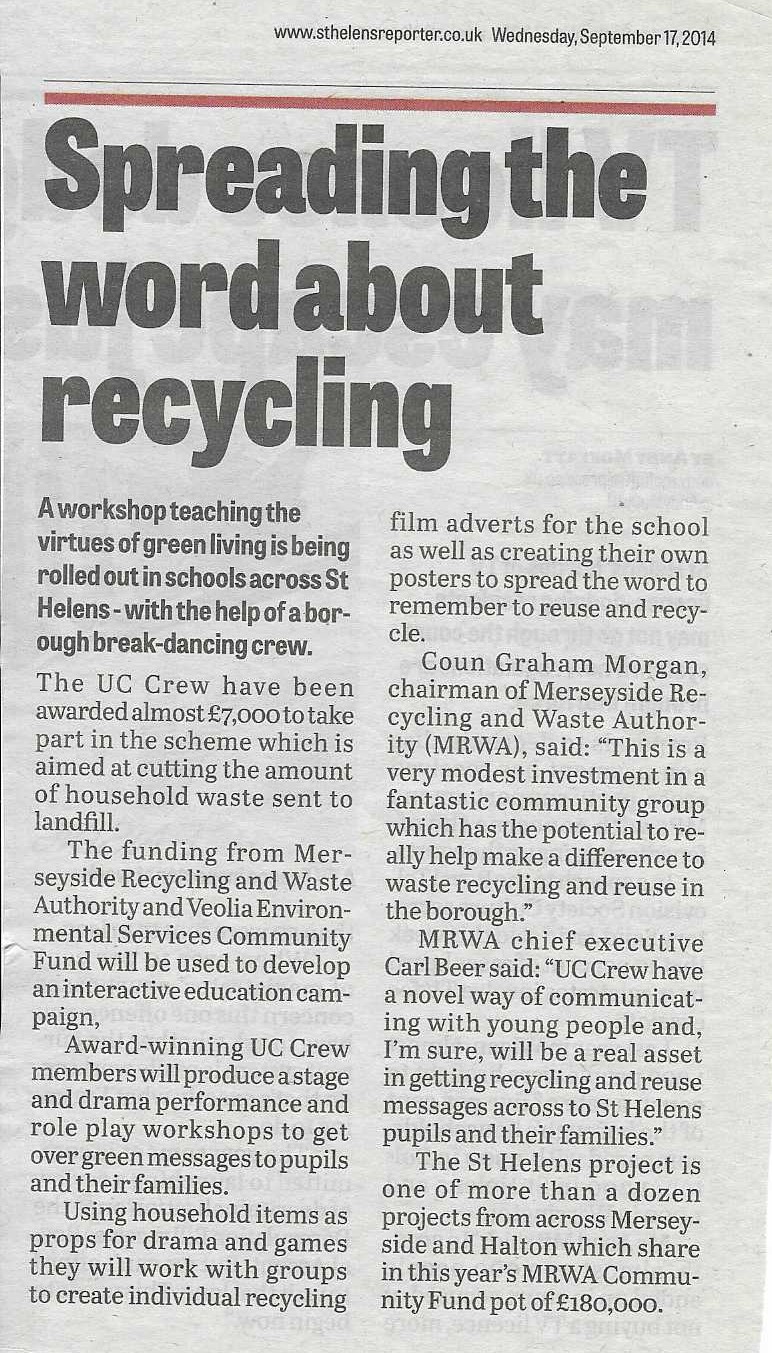
Back when Powered by Hip Hop was known as UC Crew, we used Breaking, art, games and creative activities to help children and families across St Helens think differently about recycling and waste.
Our biggest measurable impact came through our 2014/15 Recycling in Schools Project, funded through the Merseyside Recycling and Waste Authority Community Fund.
The project reached 1,262 people, directly engaged 414 young people and reported 13 tonnes diverted from landfill.
These results were also recorded independently by Merseyside Recycling and Waste Authority. Its published Community Fund results confirmed 13 tonnes diverted from landfill, a reported 15.38 tonnes CO₂e carbon reduction and 1,262 people reached.
More importantly for us, there was evidence that what young people learned in the workshops was going home with them.
That project became the strongest early example of something we have continued developing ever since:
Using Hip Hop and creativity to make environmental messages more engaging for children, young people and families.
Why use Hip Hop to talk about recycling?
Recycling education can easily become another poster on a wall or another lesson that children forget as soon as they leave the room.
We wanted to approach it differently.
The original project was designed around non-formal education, using performance and art to help children understand waste reduction, environmental damage and household recycling. Household items became props, recyclable materials became part of games and young people created superhero artwork around recycling.
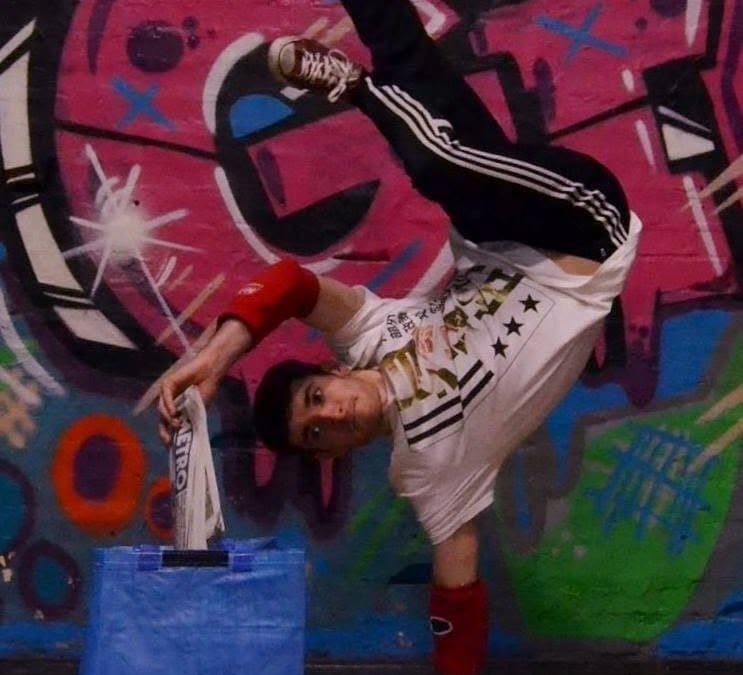
We also mixed recycling activities with movement and Breaking.
Young people could race to put different materials into the correct recycling containers, take part in challenges, create artwork and learn through doing rather than simply being told what to do.
That is still an important part of how Powered by Hip Hop works today.
We meet people through something they enjoy first, then use that engagement to open up conversations and learning.
Reaching children across St Helens
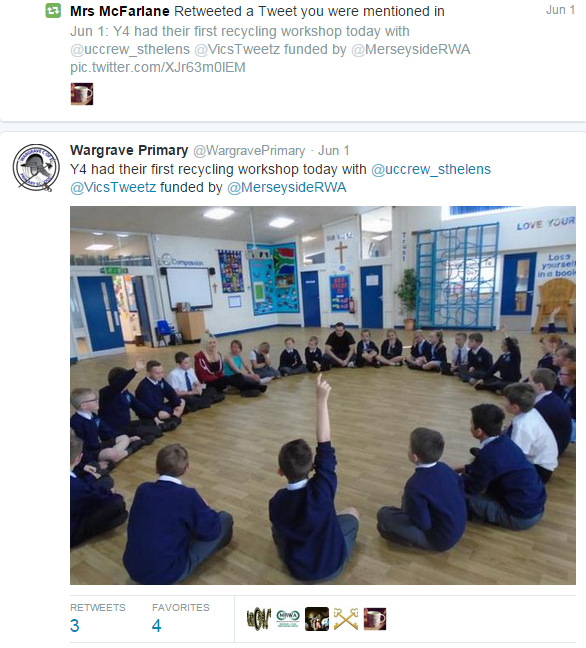
The project worked with a range of schools and community organisations across the borough.
Schools involved included:
- Wargrave Primary School
- St Mary’s Catholic Junior School
- Broad Oak Primary School
- Queens Park Primary School
- Rivington Primary School
- Garswood Primary School
Activities also took place through Parr Library, Chester Lane Library, Thatto Heath Crusaders, Newton Boys & Girls Club, Young Carers, community workshops and the Summer Streets Festival.
The original target was to reach 400 young people.
We exceeded it.
By the end of the project, 414 young people had been directly engaged and 1,262 people had been reached overall.
13 tonnes diverted from landfill
Participation numbers are useful, but they only tell part of the story.
The final project report recorded:
13 tonnes diverted from landfill.
For a relatively small community project with a budget of £6,675, that remains one of the strongest measurable environmental impacts in our organisation’s history.
UC Crew was selected as the St Helens district project in a heavily oversubscribed Community Fund round, meeting the 60-point minimum score required for projects receiving an award.
It showed that creative youth and community work could contribute to something much bigger than attendance at an activity.
It could contribute to real changes in what happened to waste.
When young people took recycling home
Some of the feedback from the project has stayed with us just as much as the statistics.
After one of the workshops, pupils from Broad Oak later recognised a workshop leader at a local Race for Life event.
They told her that they had remembered what they had been taught and were now recycling at home.
A parent from Wargrave also reported that her family had started recycling following the school workshop. Her son had taken responsibility for recycling as one of his weekly chores.
That is exactly the kind of impact we wanted.
A young person attends a workshop.
They understand why recycling matters.
Then they go home and start questioning what their family throws away.
One child can influence a whole household.
For funders and organisations looking at environmental behaviour change, that is an important part of the story.
The young person isn’t only the beneficiary.
They can also become the person carrying the message into their family.
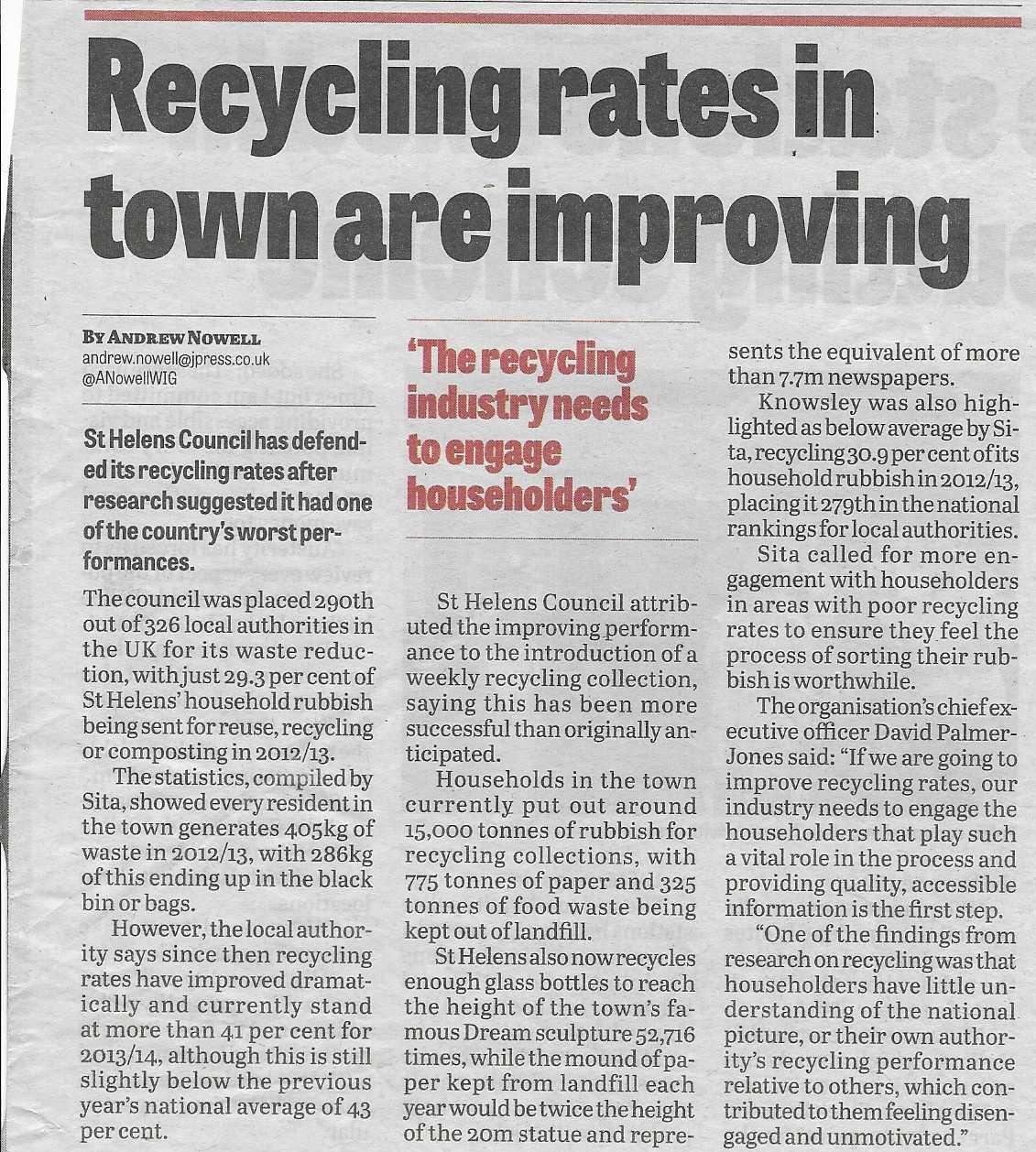
Helping improve recycling in St Helens
The project took place during a period when recycling rates and household waste were major issues across St Helens.
UC Crew was part of that wider effort.
Our role wasn’t collecting household waste or operating recycling services.
Our role was different.
We helped make recycling interesting enough for children and families to engage with it.
The final report recorded waste being diverted from landfill, young people being directly educated about recycling and examples of behaviour continuing at home afterwards.
That gives us confidence in saying that UC Crew helped improve recycling in St Helens.
And while 2014/15 remains the year in which we recorded our biggest direct recycling impact, it wasn’t the end of our environmental work.
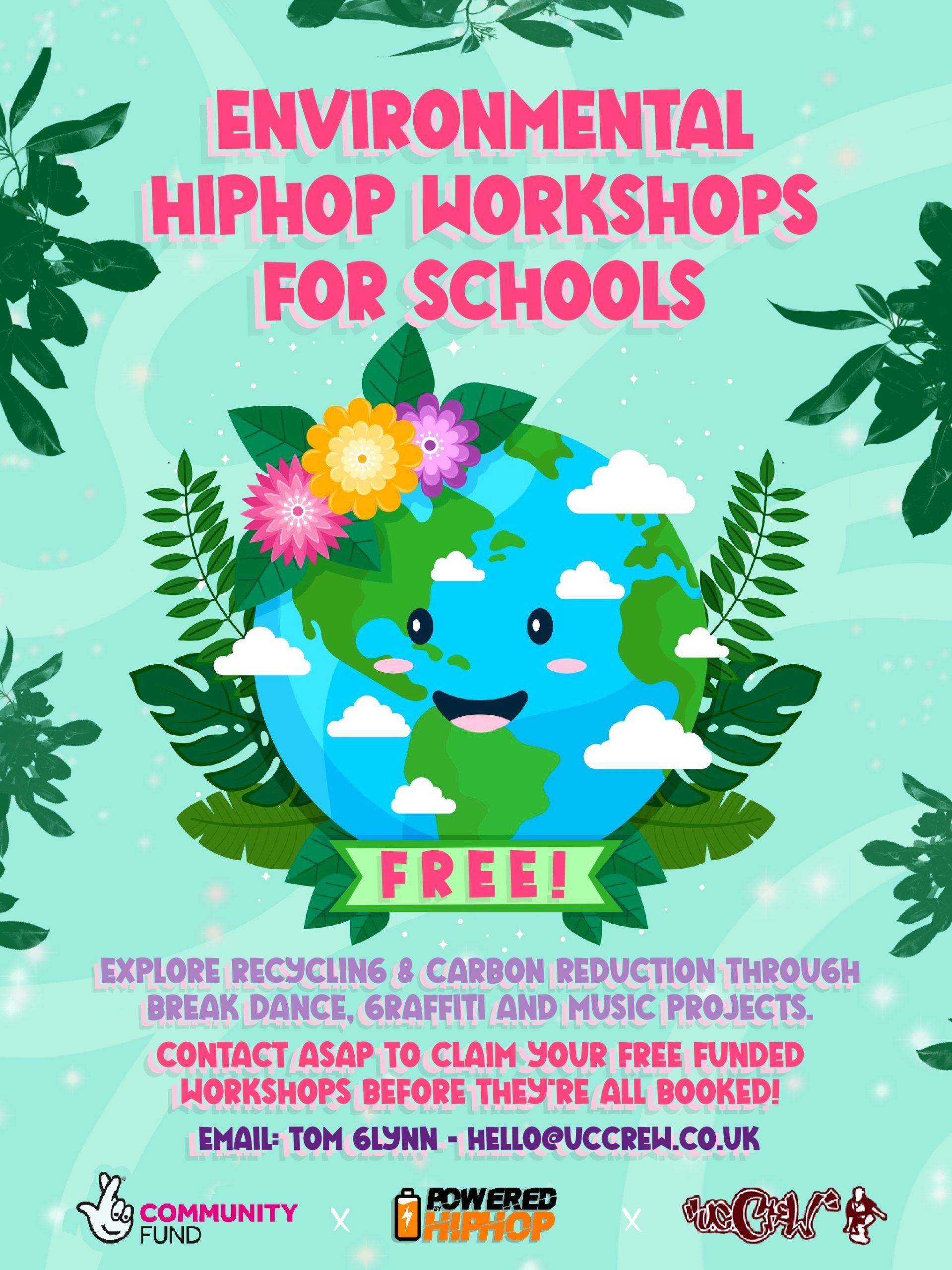
MORE THAN A DECADE OF RECYCLING PROJECTS IN ST HELENS
Environmental projects continued to appear throughout the years that followed.
The subjects and activities have changed, but the basic idea has remained the same:
Use creativity, movement and practical activity to help people engage with environmental issues.
Together for Our Planet – 2021
In 2021 we received Together for Our Planet funding.
This project focused more heavily on reuse and repair.
Children, families, schools and adults were encouraged to look at materials differently through arts activities, games and entertainment.
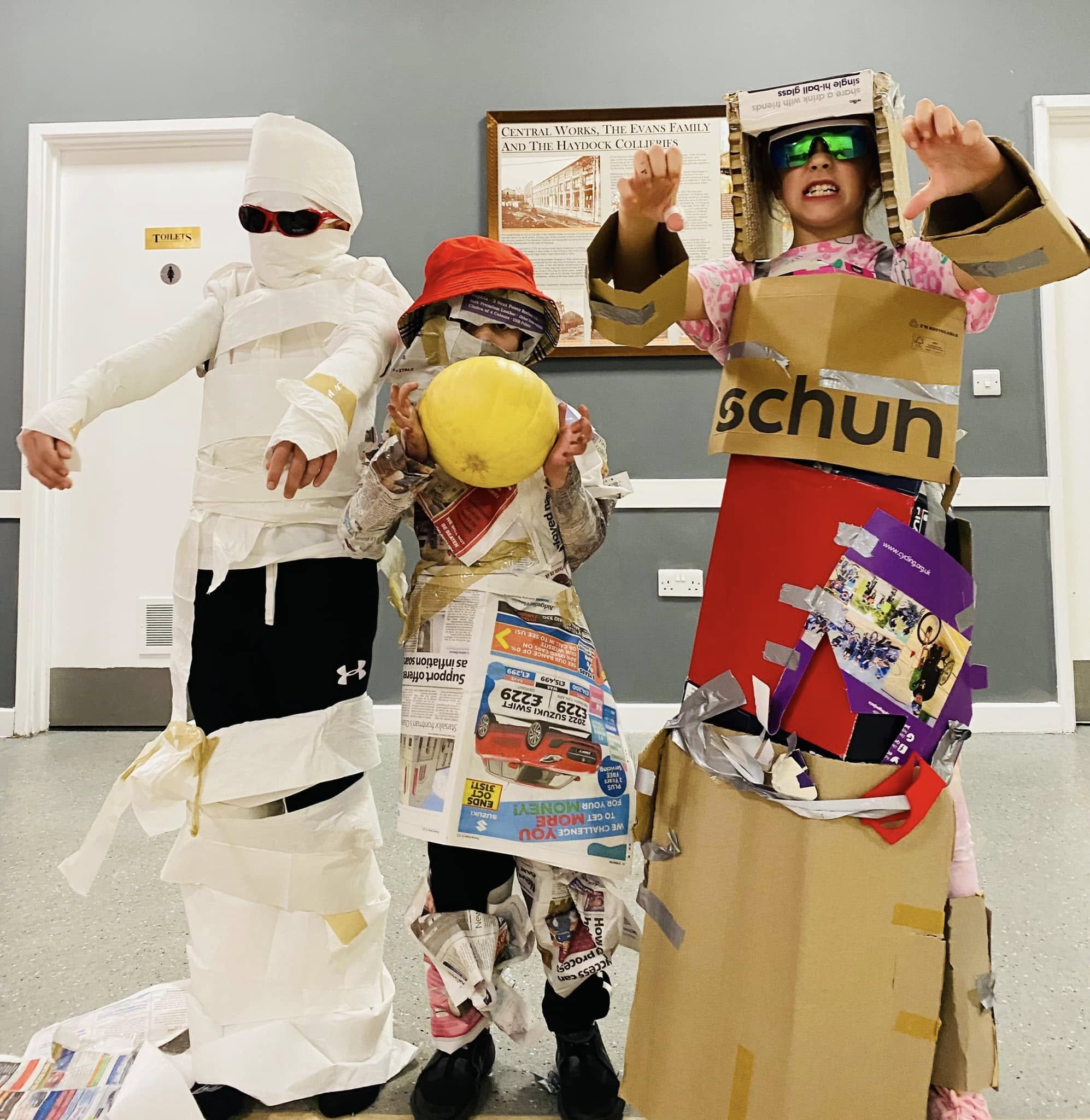
One of the highlights was our Halloween recycling activities, where reused and recycled materials became costumes and creative resources.
Rather than always asking:
What do we need to buy?
we encouraged people to ask:
What have we already got that we could use again?
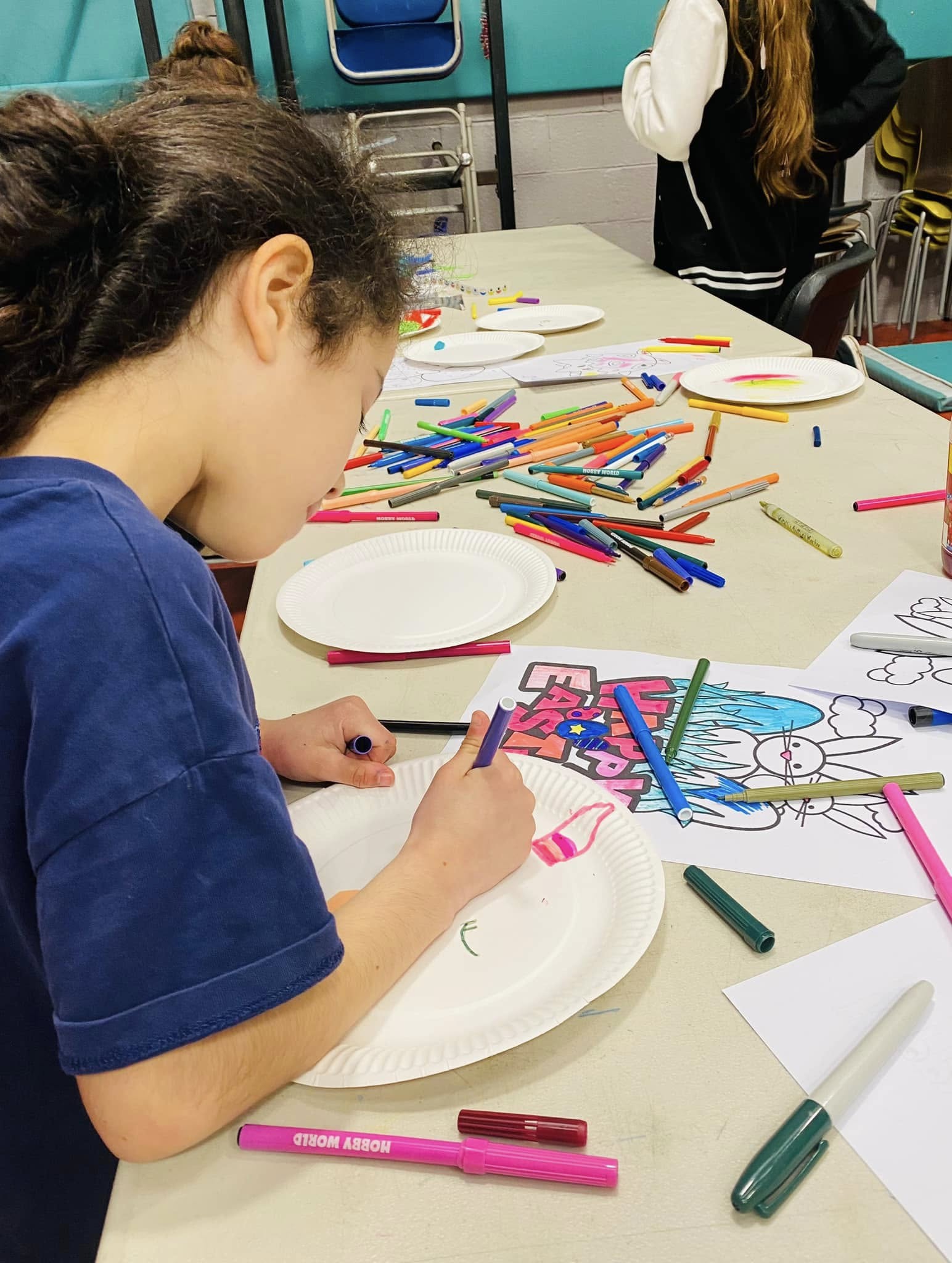
Recycled materials in our holiday activities
Over the last three years, recycled and reused materials have also become a regular part of our holiday activity clubs.
Cardboard, containers, scrap materials, old resources and unwanted items can become:
- artwork
- props
- games
- themed activities
- creative challenges
For us, this is important because sustainability doesn’t always need to be delivered as a stand-alone environmental workshop.
It can become part of how an organisation works every day.
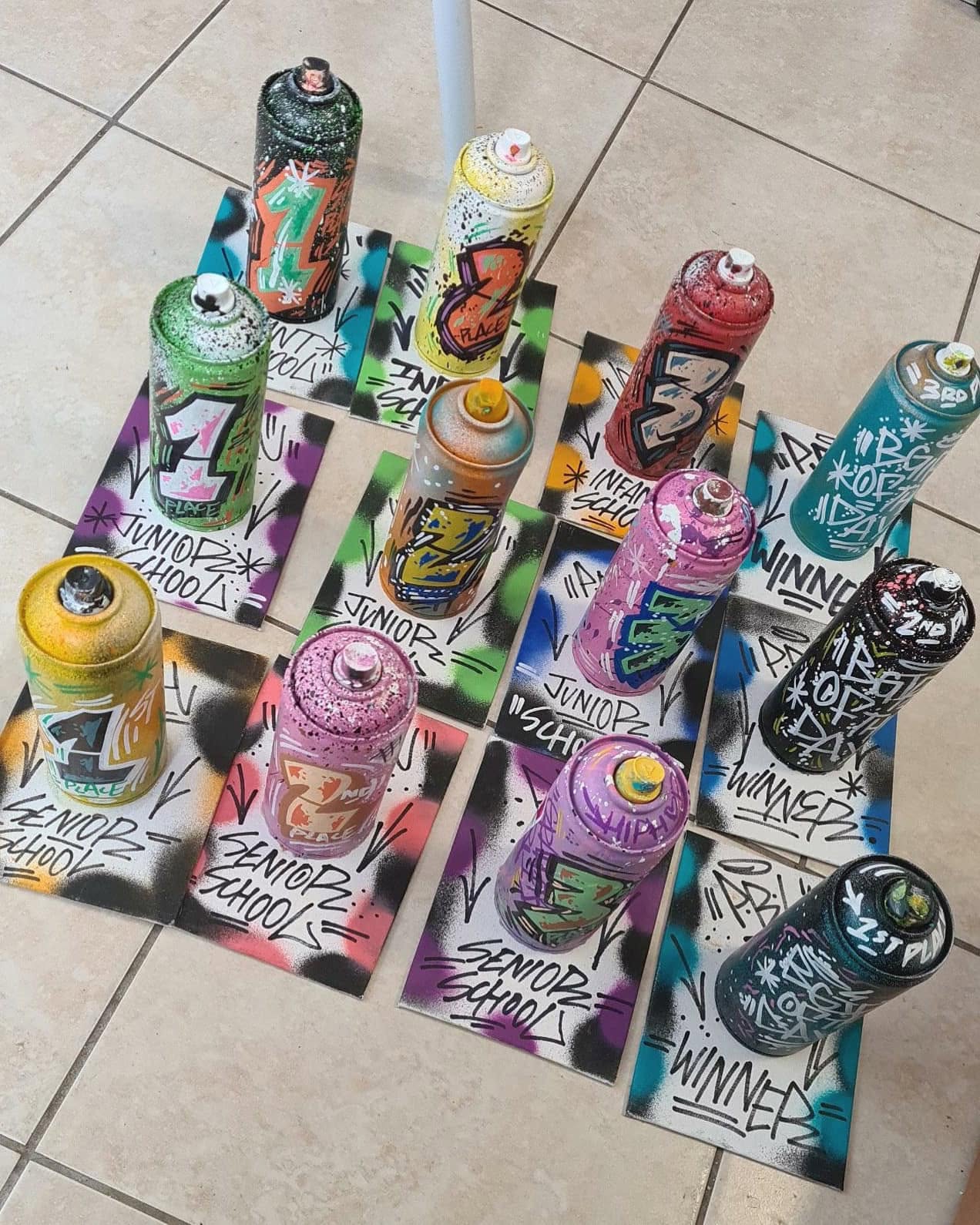
Changing our own awards
We have also started looking at our own practices.
Instead of always buying conventional plastic trophies and awards, we have replaced some of them with awards made from recycled spray-paint cans or wood.
They are different.
They have a story behind them.
And they reinforce the same message we give young people:
something doesn’t have to be new to have value.
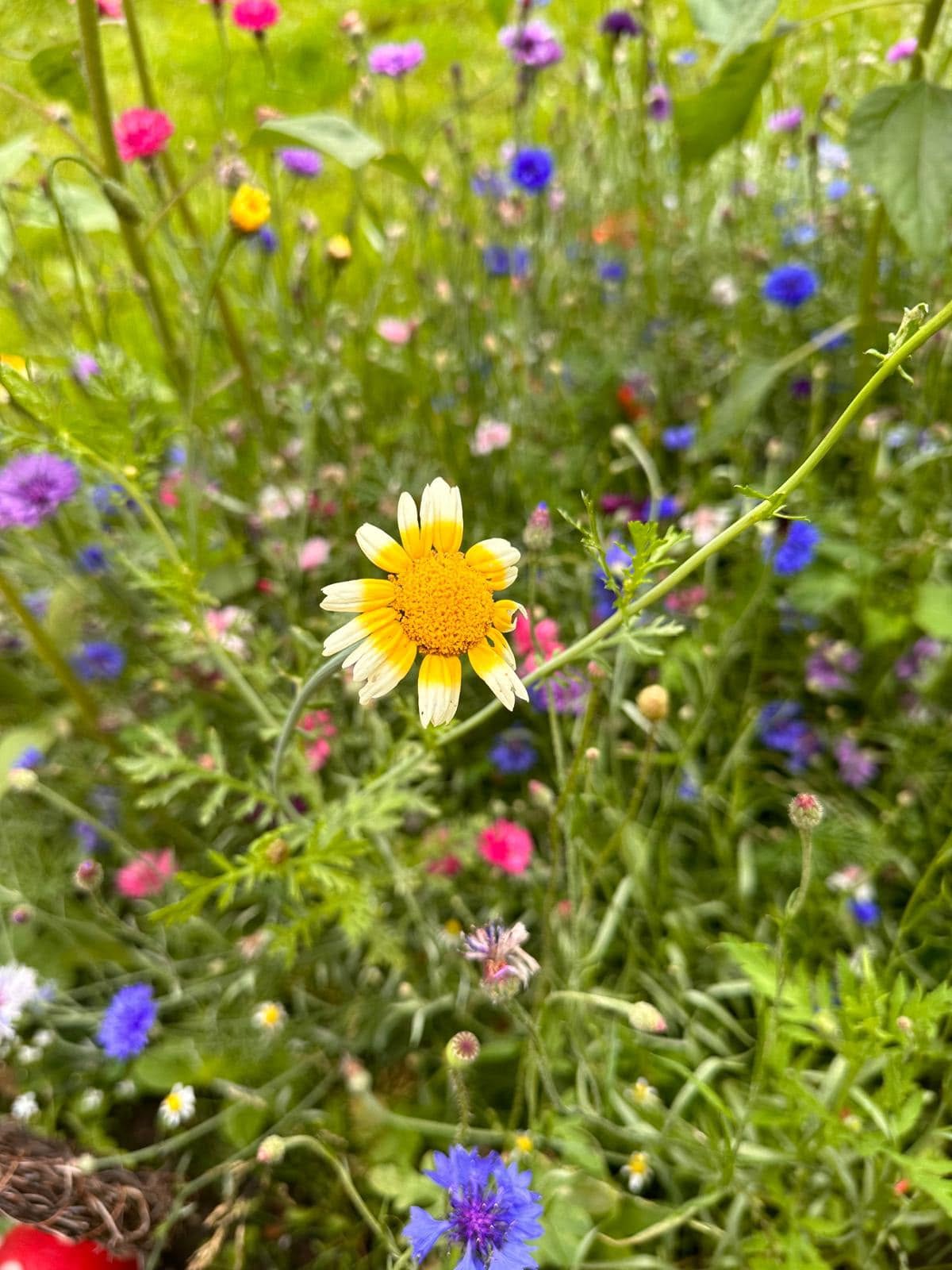
Pollinators and wildflowers across St Helens
During 2024 and 2025, our environmental work expanded beyond recycling and waste.
Through our St Helens pollination and wildflower projects, we helped raise awareness of protecting habitats for pollinating insects.
The projects also created or contributed to wildflower areas in local parks and community spaces across St Helens.
Again, the approach was practical.
Rather than only talking about protecting the environment, young people and communities could actually contribute to improving it.
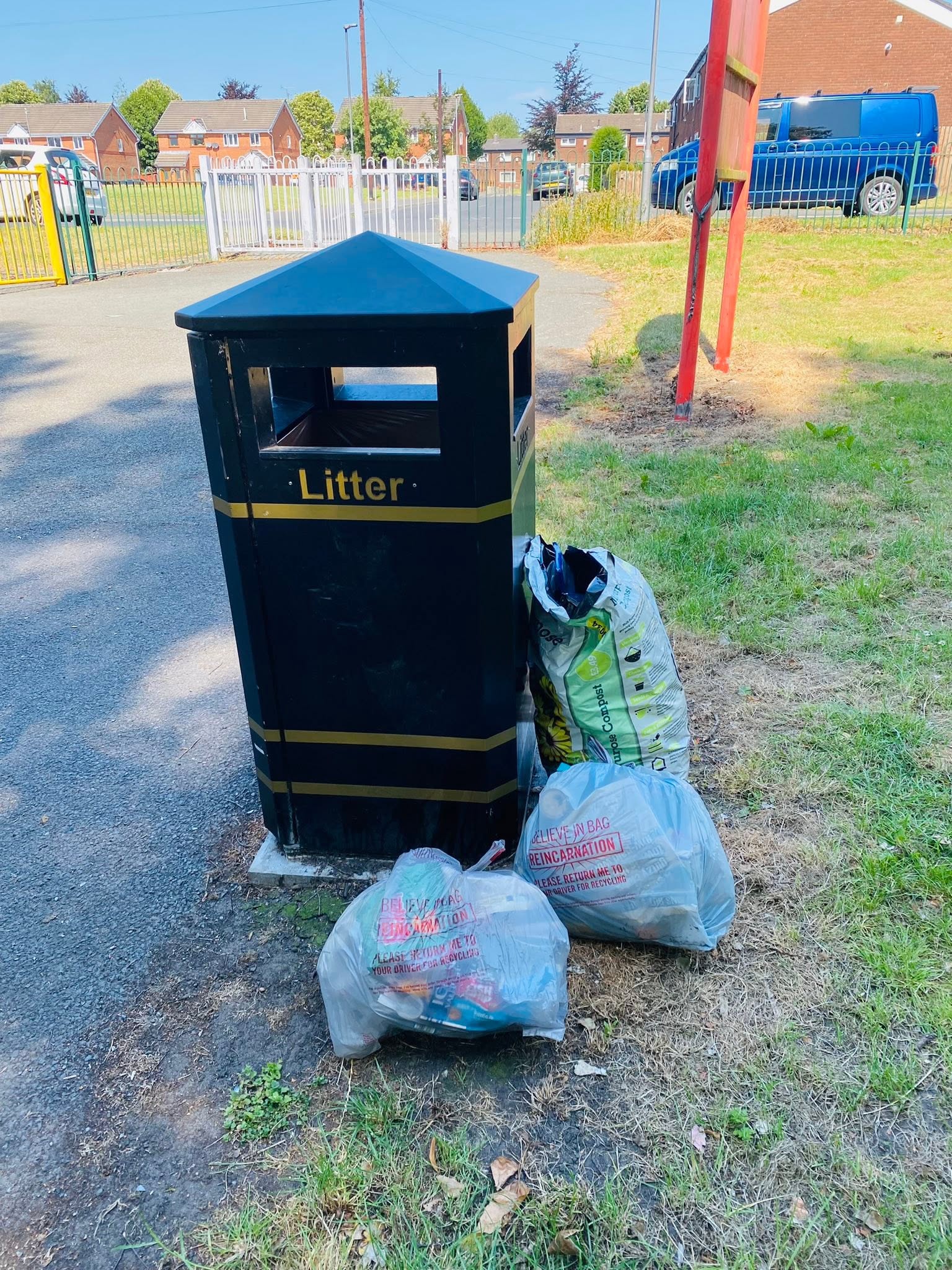
Parkour, litter picking and reverse vandalism
Environmental action has also become part of our work in Parr.
Over the last two years, our Parkour in the Park projects have combined physical activity with litter picking and reverse vandalism.
Young people aren’t simply being asked to respect their local parks.
They are helping improve them.
That might mean collecting litter.
It might mean cleaning or restoring something affected by vandalism.
It might mean helping turn an overlooked area into somewhere the community can feel more positive about.
We have found that pairing environmental action with something young people genuinely want to take part in can create a very different level of engagement.
WHY THIS MATTERS FOR FUTURE RECYCLING PROJECTS IN ST HELENS
What makes Powered by Hip Hop different isn’t that we claim to know more about waste than specialist recycling organisations. Our strength is knowing how to get children, young people and families involved.
We use Hip Hop culture, movement, art, games and youth work as the route into environmental learning — and we have more than a decade of experience testing that approach in St Helens.
And we have been testing that approach in St Helens for more than a decade.
Our 2014/15 project gives us the clearest measurable evidence:
414 young people directly engaged.
1,262 people reached.
13 tonnes diverted from landfill.
Families reporting that they were recycling at home after taking part.
Since then, the work has continued through recycling, reuse, repair, recycled art, pollinator projects, wildflower planting, litter picking and environmental improvement.
So when Powered by Hip Hop talks about developing new recycling or environmental projects, we are not starting from scratch.
We are building on more than a decade of learning about what engages children, young people and families.
What could we do next?
We believe there is still a huge opportunity to combine environmental education with activities people genuinely want to take part in.
That could include:
recycling and reuse workshops in schools, creative environmental projects, recycled art, community clean-ups, litter reduction, environmental activities for families, holiday programmes and projects combining movement with looking after local spaces.
The exact activity can change.
The principle remains the same.
Get people involved first. Make the learning memorable. Give them something practical they can take home or use in their community.
Our biggest recycling impact may have started more than a decade ago.
But the lessons from it are still shaping what Powered by Hip Hop does today.
And we think there is much more we can do next.
The challenge hasn’t disappeared. St Helens’ current Resources & Waste Strategy runs to 2030, with recycling, reuse and the circular economy continuing to form part of the borough’s approach to waste.
Our role can be helping turn those bigger environmental ambitions into activities that children, young people and families actually want to take part in.
PLANNING AN ENVIRONMENTAL PROJECT?
If you’re a school, funder, council team, housing provider or community organisation looking for a creative way to engage children, young people or families with recycling, reuse or the environment, we’d be happy to talk about what we could develop together.
Please message us.