

Eastwood Rockers – Liverpool Break Dance Crew
Who Were the Eastwood Rockers?
The Eastwood Rockers were a pioneering Break Dance crew from Toxteth, Liverpool, active during the early-1980s. They played a crucial role in shaping Liverpool’s Hip Hop and Break Dancing scene, performing in the streets and competing against other top crews of the time.
When Did They Start Breakdancing?
The crew formed in the early 1980s, right at the start of the UK’s Break Dancing boom. Inspired by the explosion of Hip Hop culture from America., they honed their skills on the streets of Liverpool, developing their signature moves and battle-ready routines.
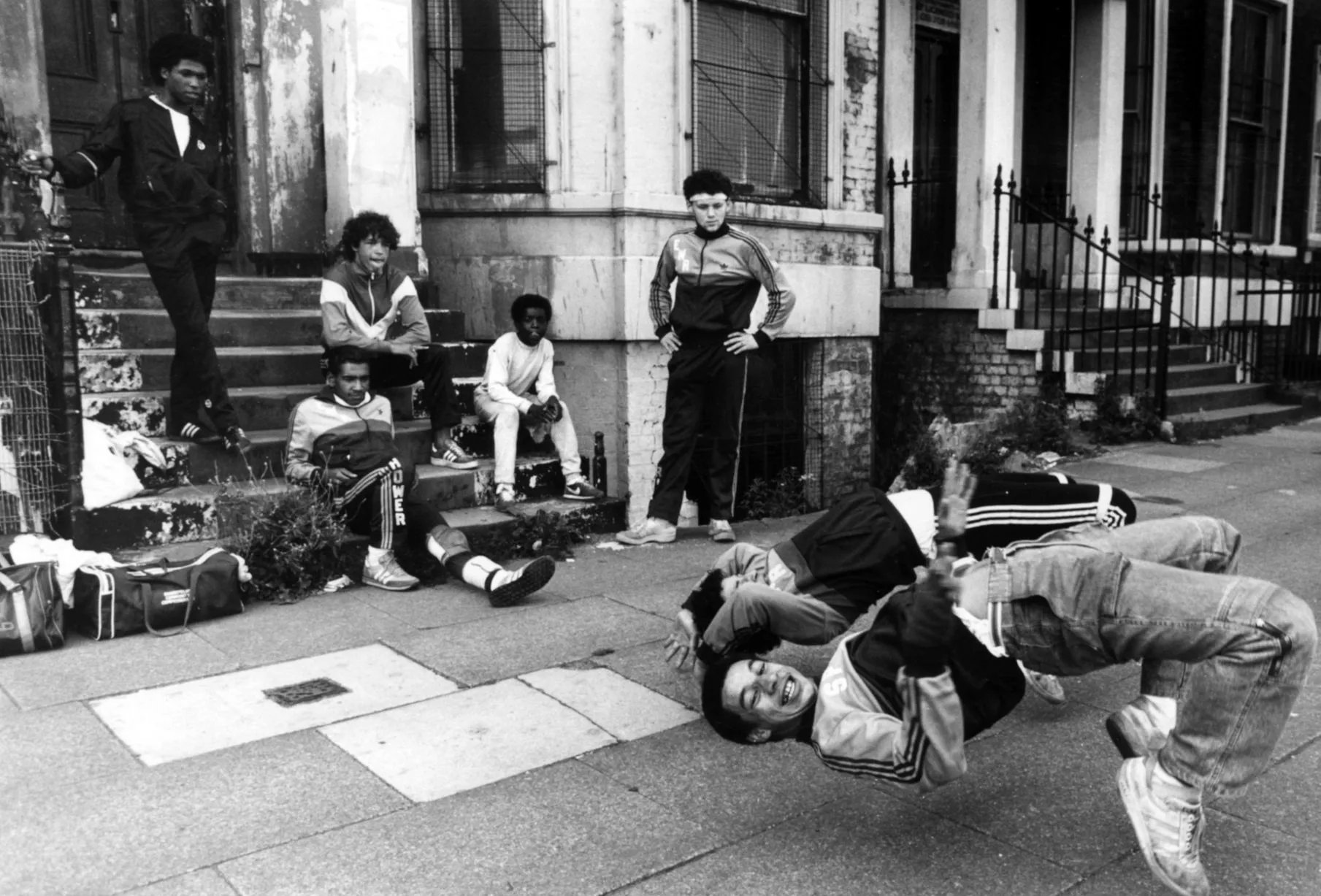
Who were the members of Eastwood rockers?
Muller (Stephen Mulrooney)
MC
Freaky Friday – (Nathan Hazel – The name came from me getting freaky on Fridays. It was a sign of the weekend arriving, and most weekends we had dancing gigs in clubs.)
Trix
Hower
Vernon (Vernon Gorman)
Roger (Roger Dove)
The Braithwaite Twins (Richard and Dennis Braithwaite part of Street Force)
Nathan Hazel recalled: “That’s me… Behind Muller (Stephen Mulrooney) on the floor, with Vernon Gorman behind. Roger Dove on the steps with the Braithwaite twins.“

Where did they perform?
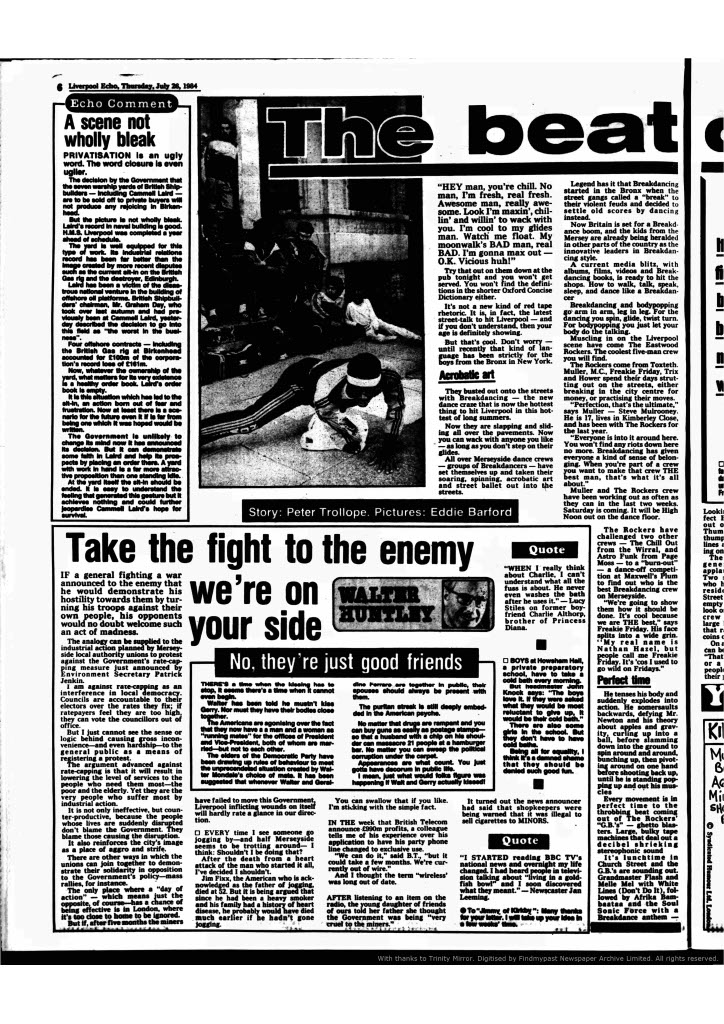
The Eastwood Rockers became a must-see crew in Liverpool, attracting crowds with their performances on Church Street, one of the city’s busiest shopping areas.
Many people vividly remember seeing their performances, they were more than just street shows—they were a key part of Liverpool’s emerging Hip Hop scene, bringing the culture to life for a new generation.
Saturday Practice Sessions and Maxwell’s Pub
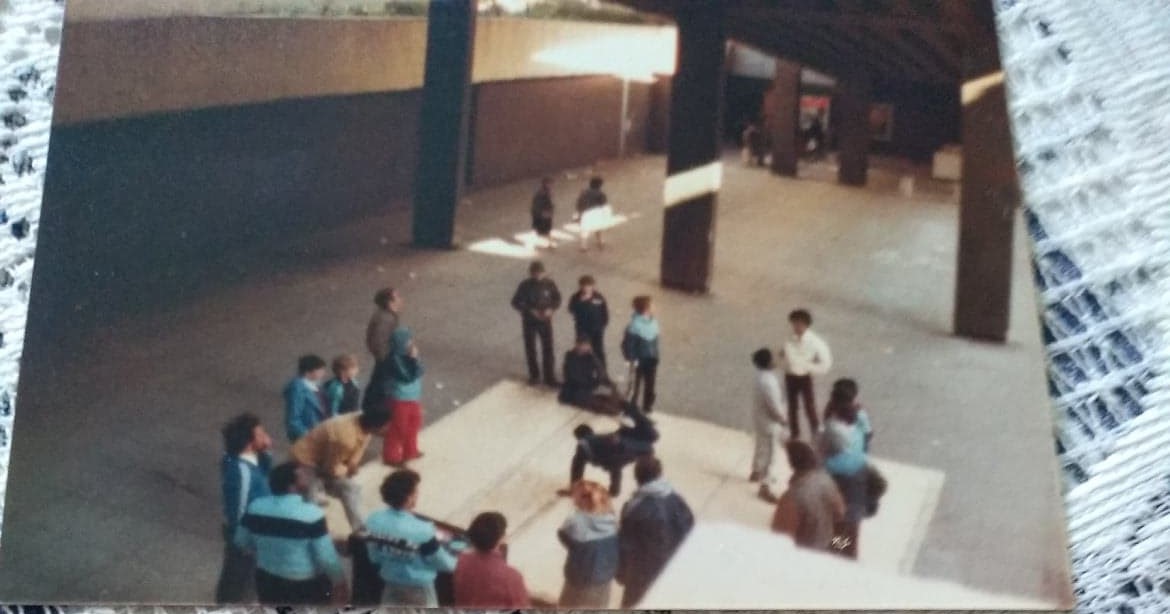
Every Saturday, the Eastwood Rockers and other Liverpool Breakers gathered at the stage in St Johns Precinct to practice and level up their moves. This open practice space became a key meeting spot for dancers to showcase their skills and learn from each other.
Additionally, Maxwell’s pub on Bold Street was another important venue for Liverpool’s breakdancing community. Maxwell’s had a dance floor where older Liverpool breakers and poppers would meet on Saturdays.
Vernon Gorman of the Eastwood Rockers invited crews from Southport and across Merseyside. It became a great weekly event featuring battles, reggae beats, and whistles.
One of the most notable figures at these gatherings was Dave The Wave, a legendary popper known for his incredible moves. Who later became part of Broken Glass, one of the UK’s most influential Popping and Breaking crews.s.
Support from Local Businesses and Record Stores
The local bakery near the stage in St John’s Precinct supported the Break Dancing community by allowing them to plug in their ghetto blaster to their power supply. This meant dancers could play music from legends such as Grandmaster Flash, Run-DMC, Big Daddy Kane, and Electro while practising and performing.
For those looking to buy the latest Break Dancing tracks, Cheverton Records basement in Liverpool was the go-to place. This shop specialised in 12-inch imported records for electro music, ensuring Liverpool’s breakers had access to the freshest beats for their routines.
Larks in the Park Performance
The Eastwood Rockers also performed at the Larks in the Park event, a free festival held in Sefton Park, Liverpool, during the early 1980s. This festival was a significant cultural event, featuring a variety of local artists and performers. Their participation highlights their active involvement in Liverpool’s vibrant arts scene during that period.
Battles in Scotland – Glasgow and Paisley (1984)
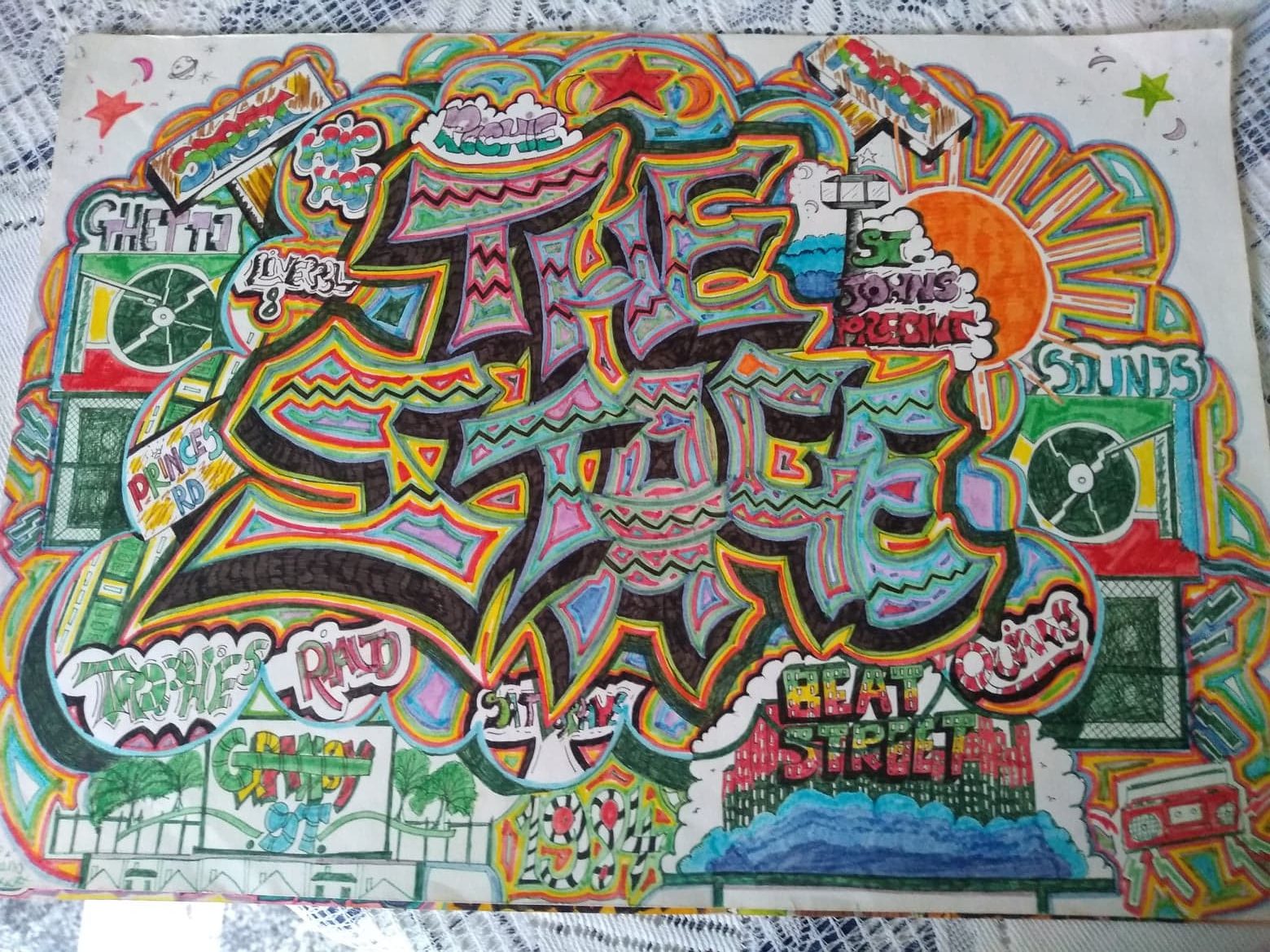
In 1984, Vernon Gorman of the Eastwood Rockers travelled to Glasgow and Paisley, Scotland as part of Magic Force crew. Vernon was their windmill guy, showcasing his power moves in high-energy break dance battles. One of the most significant battles took place against the Glasgow City Breakers, marking an important moment in Merseyide Break Dancing history.
Crews didn’t travel great distances in the 1980s,these inter-city competitions helped spread hip-hop culture and strengthened the network of Dreak dance crews across the UK.
Hip-Hop Jam at the Coconut Grove (Summer 1984) – The Big Battles
In the summer of 1984, the Eastwood Rockers organised a Hip Hop Jam at Coconut Grove, one of Liverpool’s most famous clubs at the time.
What Was the Coconut Grove?
Located at the corner of Green Lane and West Derby Road in the Tuebrook area, the Coconut Grove—also known as “The Cokey”—was a legendary Liverpool venue.
- Originally opened in 1932 as the Carlton Cinema, seating nearly 2,000 people.
- Converted into a nightclub in 1982, featuring a tropical Hawaiian-themed interior with palm trees.
- One of Liverpool’s most popular venues in the 1980s and early 1990s, hosting major events.
- Renamed The Venue in the early 1990s before closing in 1997 and later demolished in 2017.
The Battles: Break Machine (USA) & Street Funk
The Coconut Grove event in 1984 was a legendary moment in Liverpool’s Break Dancing history, featuring high-stakes battles between some of the best crews at the time.
Nathan remembers Eawood Rockers battling Break Machine from America and winning. This was a huge victory for the Liverpool Break Dancing scene and proved that UK breakers could compete with some of the biggest names in the world.
Eastwood also battled another crew from Mereseyide called Street Funk, members of Street Funk still have fond memories of this competition today.
These battles were a defining moment for the Eastwood Rockers, solidifying their status as one of Liverpool’s top Break Dance crews.
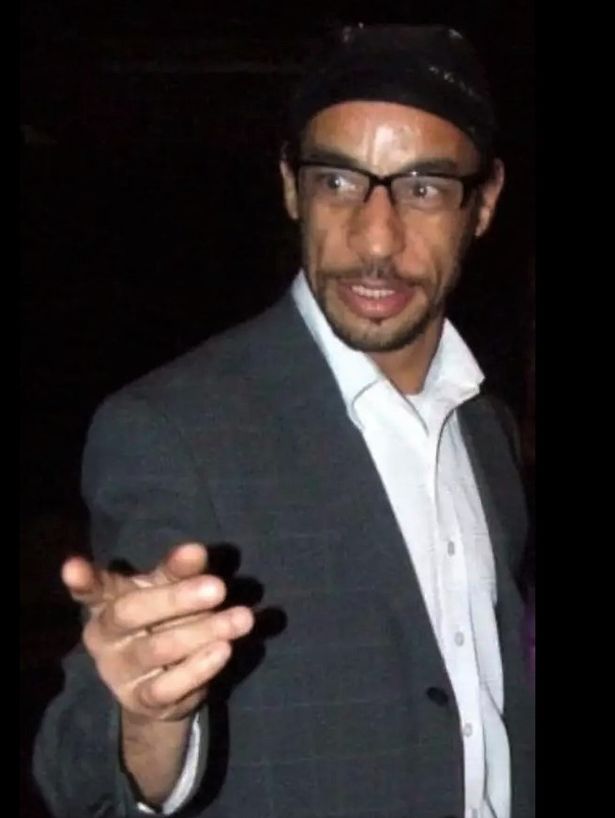
The late Stephen Mulrooney (1964 – 2022) dancer, workshop facilitator, mentor and inspirational community artist. (Image: La’Tasha Mulrooney)
Legacy and Recognition
The Eastwood Rockers’ impact extended beyond performances, as they inspired many young dancers who watched them on Church Street and attended their break dance classes.
Additionally, Stephen Mulrooney (Muller) was posthumously honoured as one of Liverpool’s Black unsung heroes.
An article from 21 of Liverpool’s Black Unsung Heroes by Patrick Graham says
“Stephen, known as Muller, grew up in Toxteth and over the years has used his talents as a dancer, youth leader and workshop facilitator, who inspired, mentored and motivated children across the region.
Muller was one of the early pioneers of street dancing in Liverpool and was well known in the break dance and body pooping scene around Liverpool’s clubs and further. He was part of the dance group Eastwood Rockers who entertained people all over and appeared in Liverpool football clubs, Anfield Rap video.”
His daughter La’Tasha said: “Our dad, one of the most talented men I’ve met. Without arrogance and could build the most amazing atmosphere with people from all over Liverpool. One in a lifetime.”
References
Liverpool Echo: Offers articles and archives related to Liverpool’s Hip Hop and Break Dancing history.
Groovin’ Records – Larks in the Park Archive: Documents the “Larks in the Park” events, highlighting performances by local artists, including Break Dance crews.
Black History Liverpool – 21 of Liverpool’s Black Unsung Heroes: Features profiles of influential Black individuals from Liverpool, including Stephen Mulrooney (Muller) of the Eastwood Rockers.
UC Crew – Liverpool Breakdance History: Provides a comprehensive history of Break Dancing in Liverpool, featuring archival photos and articles about various crews, including the Eastwood Rockers.
James Hamilton’s Disco Page – July 1984: Contains entries about Liverpool’s nightclub scene in 1984, including mentions of the Coconut Grove and breakdancing events.
Transalpino Liverpool – Eastwood Rockers Photo: Shares images and discussions about the Eastwood Rockers and Liverpool’s breakdancing history.
Angies Liverpool on Twitter: Posts historical photos and information about Liverpool’s cultural scene, including the Eastwood Rockers.
Interviews. research and donated photographs from members of the public and Eastwood Rockers by Powered by Hip Hop and UC Crew.
This project is funded by Sporting Heritage
If you have any memories of North West Break Dancing history, feel free to message us.
For more details or any updates, keep an eye on our social channels.